
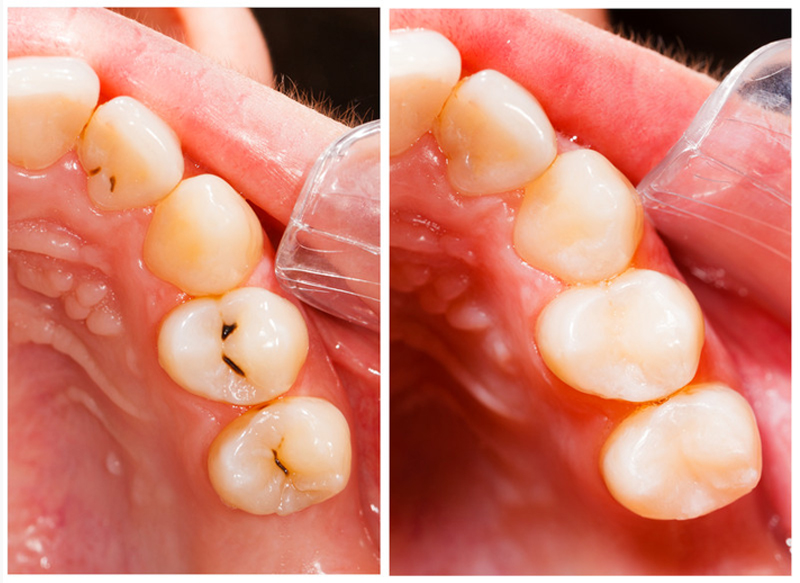
Tooth Decay in Springboro & Dayton
Tooth decay is one of the most common dental conditions, caused by bacteria that produce acid and gradually wear away tooth enamel.
request an appointmentSymptoms and Causes of Tooth Decay
Early tooth decay may not cause any noticeable symptoms, which is why regular cleanings and exams are so important for catching it early. As decay progresses, you may notice tooth sensitivity, visible pits or holes, or pain when eating or drinking. Decay is caused by plaque bacteria feeding on sugars and starches left on your teeth, producing acids that erode enamel over time.
Treating Tooth Decay
Treatment depends on how advanced the decay is. Minor decay is often treated with a filling or inlay or onlay, while more extensive decay may require a crown or root canal. For young children or patients who want to avoid drilling, we also offer Silver Diamine Fluoride to stop decay noninvasively. Preventive treatments like sealants can also help protect vulnerable teeth from future decay.
Tooth Decay: Frequently Asked Questions
What causes tooth decay?
Tooth decay is caused by plaque bacteria that feed on sugars and starches, producing acids that erode tooth enamel over time.
How do I know if I have a cavity?
Signs include tooth sensitivity, visible dark spots or holes, and pain when eating or drinking, though early decay often has no symptoms and is found during a routine exam.
Can tooth decay be reversed?
Very early decay, before a cavity forms, may sometimes be reversed with fluoride treatment and improved oral hygiene. Once a cavity forms, restorative treatment is needed.
How is tooth decay treated?
Treatment ranges from a simple filling for minor decay to a crown or root canal for more advanced cases, depending on how far the decay has progressed.
How can I prevent tooth decay?
Brushing twice daily, flossing, limiting sugary foods and drinks, and keeping up with regular dental checkups are the best ways to prevent decay.
Is tooth decay more common in children?
Children are at higher risk due to developing dental hygiene habits, which is why sealants and fluoride treatments are commonly recommended for kids.


